 0
0
 0
0
Building a serious digital product is less like assembling a feature list and more like running a relay race. Strategy hands off to architecture. Architecture hands off to development. Development hands off to deployment. Then comes monitoring, iteration, scaling, and maintenance. Every baton pass is a risk point. Every gap between teams is a delay waiting to happen.
That’s why more companies are looking for partners who can stay with a product from the first whiteboard sketch through production and beyond. Not because they lack internal talent, but because continuity matters. When one team understands the entire system history — decisions, trade-offs, shortcuts, constraints — execution tends to stay steady even as complexity grows.
Canada has quietly become one of the stronger markets for this kind of full-cycle engineering support. The firms below are regularly considered by companies that want a single partner capable of guiding a product across its full lifecycle instead of handing it off from vendor to vendor.
Where Full-Cycle Teams Actually Prove Their Value
A vendor can claim they offer “end-to-end services.” The real test comes when a project hits its second or third phase. That’s when architectural shortcuts start to matter, early assumptions get tested, and performance expectations collide with real usage.
Studies from product delivery benchmarks consistently show that projects using a single engineering partner across all phases finish faster and require fewer post-launch fixes than projects split across multiple vendors. The reason isn’t speed — it’s continuity. Fewer handoffs mean fewer misinterpretations. Fewer misinterpretations mean fewer rewrites.
Teams that stay involved from discovery through deployment also tend to design more carefully at the start. They know they’ll be responsible for scaling whatever they build. That changes how they make decisions.
1. Euristiq
When organizations want a partner who can stay involved from product definition to post-launch scaling, Euristiq’s custom software development in Canada is often part of the shortlist.
Founded in 2016, Euristiq works with enterprise and mid-market companies across North America and Europe, including Philips, Bell Canada, Ryanair, Interac, Kloudville, Octopus, and Gen Digital. These clients typically require more than just development — they need architectural planning, modernization, cloud strategy, and long-term support.

Their core capabilities include:
- AI-native product design and development
- Structured discovery phase for precise scoping
- PoC and MVP delivery within defined timelines
- Legacy modernization and system re-engineering
- Data platforms and analytics engineering
- IoT and AIoT solution delivery
- Cloud infrastructure across AWS, Azure, and Google Cloud
- Dedicated certified engineering teams
They hold ISO 27001:2022 certification and are an AWS Advanced Tier Services Partner. In enterprise environments, those credentials usually signal established internal processes and predictable delivery standards.
Companies typically bring them in when a product needs both strategic planning and long-term technical ownership rather than short bursts of development work.
2. Iversoft
Ottawa-based Iversoft is often chosen for projects where reliability and structure matter more than speed. Their work frequently spans multiple lifecycle stages, especially for systems that must remain stable after launch.
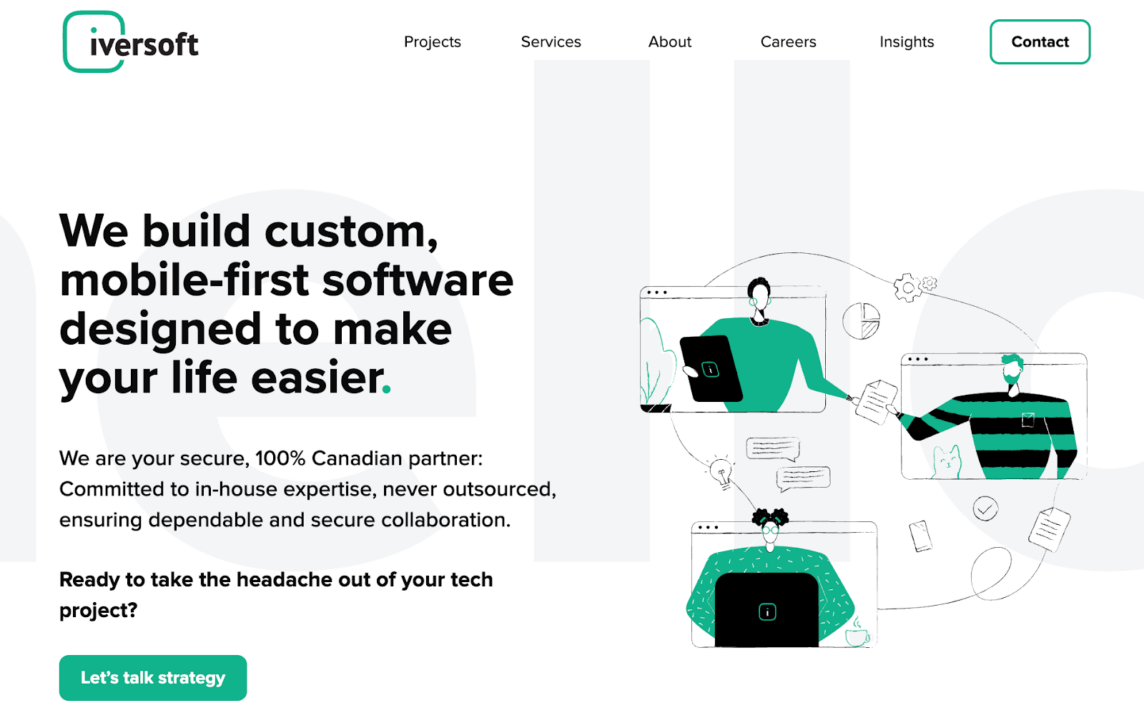
Their capabilities include:
- Secure software development
- Cloud architecture and deployment
- Mobile and web engineering
- Enterprise system integration
Organizations operating in regulated or security-focused sectors often need partners who can design, build, and maintain systems with compliance in mind. Iversoft’s experience in those environments makes them a practical fit when software must hold up under review as well as under load.
Teams responsible for long-term system stability often value that type of engineering discipline.
3. Architech
Toronto’s Architech is usually brought in when companies need structural clarity before scaling. Their involvement often starts early and continues through later growth phases.
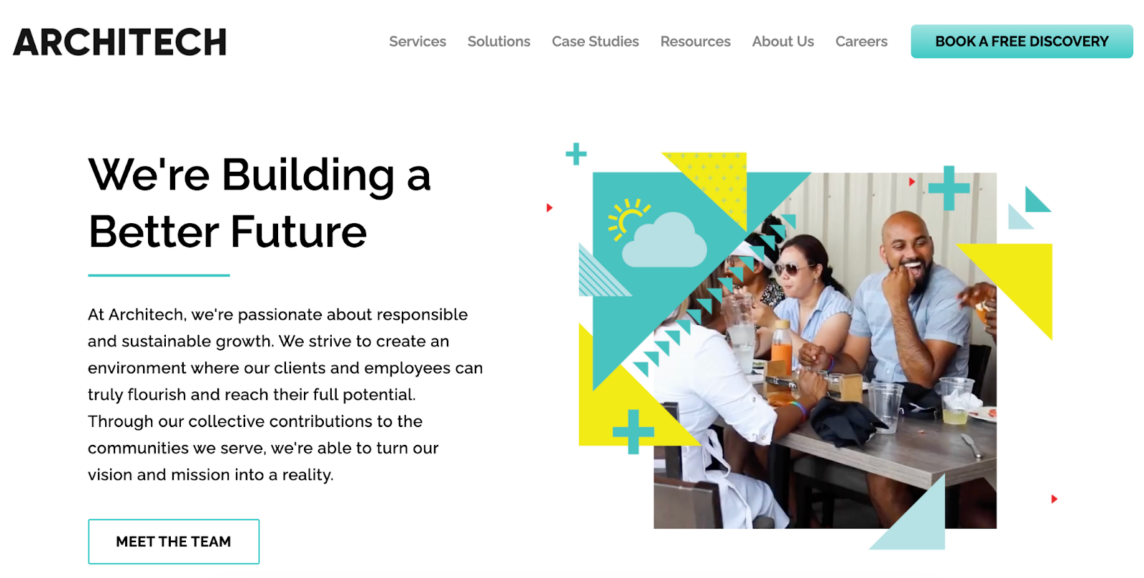
Their services include:
- Enterprise platform architecture
- Cloud-native system design
- Data platform engineering
- API and integration ecosystems
Large systems rarely fail because of one bug. They fail because of structural limitations that only become visible at scale. Teams with architectural depth tend to identify those constraints before they become production problems.
Organizations expecting significant user growth or heavy integrations often involve Architech early to ensure the foundation can handle expansion.
4. Osedea
Montreal-based Osedea is frequently selected when companies want a collaborative development partner that keeps stakeholders involved throughout a product’s evolution.
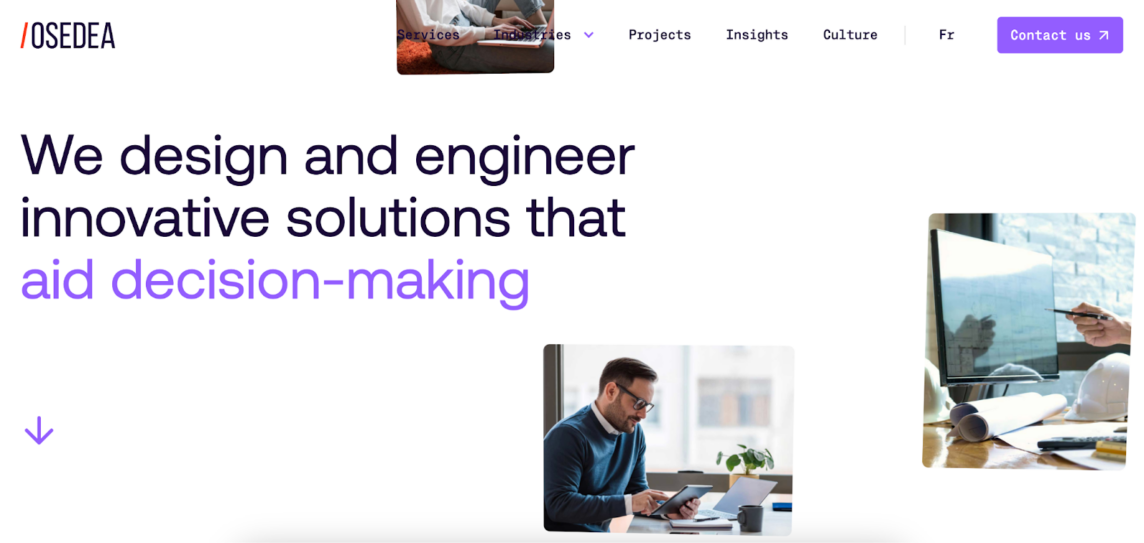
Their services include:
- Custom software development
- AI and machine learning platforms
- UX-centered design
- Product consulting
Products that evolve quickly benefit from teams that maintain steady communication and adapt priorities as conditions change. Osedea’s workflow emphasizes ongoing alignment, which helps technical execution stay connected to business goals.
For organizations building products expected to change rapidly, that level of collaboration can reduce costly course corrections.
5. MindSea
MindSea is often chosen by companies that prefer careful execution over aggressive timelines. Their work tends to emphasize code quality, clarity, and maintainability across the full lifecycle.
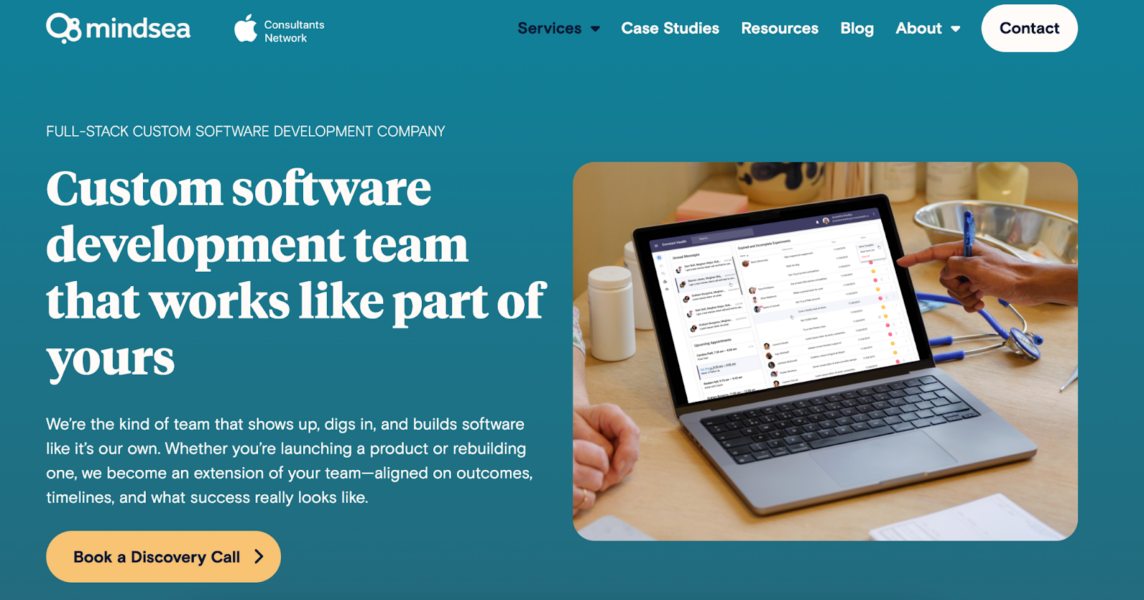
Their capabilities include:
- Custom application development
- Product validation and design
- Mobile and web engineering
- Performance optimization
Products rarely stay static after launch. Teams responsible for maintaining them usually appreciate vendors who build systems that are easy to understand and extend. MindSea’s measured approach often supports that outcome.
Organizations planning long product lifespans often prioritize this kind of steady engineering.
Why Continuity Beats Vendor Rotation
Switching development partners midway through a product lifecycle almost always introduces friction. A new team needs time to understand the architecture, review code, reconstruct past decisions, and rebuild context. That learning curve can take weeks or months, depending on complexity.
Companies that keep one engineering partner across phases often avoid that slowdown. The same team that designed the system understands its trade-offs. The same engineers who wrote early modules can diagnose issues faster later.
This continuity doesn’t just save time. It reduces risk. Fewer transitions mean fewer misunderstandings, and fewer misunderstandings usually translate into more predictable delivery.
The Cost Curve Most Teams Underestimate
Product development costs don’t rise evenly. Industry research shows that fixing an issue after release can cost several times more than fixing it during development, and dramatically more than catching it during design. That’s one reason experienced engineering partners push for detailed discovery phases.
Teams responsible for maintaining what they build tend to be more cautious early. They ask more questions. They validate assumptions. They test architecture before scaling. That upfront discipline often looks slower, but it reduces expensive surprises later.
Organizations that skip this phase often pay for it in rework, performance fixes, or infrastructure redesign.
Long-Term Thinking Shows Up in Small Decisions
You can usually tell whether a team thinks beyond launch by how they handle small details. Naming conventions. Documentation. Logging. Error handling. Deployment scripts. These things don’t impress stakeholders during demos, but they matter enormously once the system is live.
Engineering partners who treat these details seriously tend to produce software that survives growth. Systems built without that discipline often become fragile as complexity increases.
Internal teams inheriting a system months later can usually tell which type of partner built it.
Final Perspective
Canada’s software ecosystem is full of capable engineers. What separates certain firms is their ability to carry responsibility across an entire product journey instead of just one phase. That continuity often results in steadier delivery, clearer architecture, and systems that hold up under real-world conditions.
The companies listed above approach product engineering from different angles, yet they share one practical strength: they understand that successful products aren’t assembled in isolated stages. They’re shaped through connected decisions that begin early and continue long after launch.
For organizations building products meant to last, that kind of partner can make the difference between constant rebuilding and steady progress.