
 0
0
 0
0
Regulated financial products are harder to build than standard fintech apps. They involve security, transaction accuracy, identity checks, audit trails, and compliance workflows. Payment infrastructure, card issuing, open banking, lending, digital wallets, and banking integrations are areas where technical decisions can create compliance risk. Weak architecture leads to failed checks, broken payment flows, data exposure, or slow operational reviews. Companies need engineering partners who understand financial systems and regulated workflows together. Compliance-aware fintech engineering is now a practical requirement, not a nice extra.
This article focuses on companies relevant to regulated fintech products and secure financial infrastructure. Softjourn leads the list because of its background in payments, card platforms, core banking, remittance, open banking, KYC/AML-related integrations, architecture review, and technical audits. Kindgeek, The Software House, Modsen, and Azilen bring different but relevant angles, from card issuing and neobanking to payment rails, security, financial AI, and real-time transaction systems. Here is the selection overview.
How We Chose These Top 5 Companies
The companies were selected because they connect to regulated fintech work, not because they are general software vendors. Each company fits a different part of the market: payments, card programs, open banking, compliance workflows, fraud prevention, financial AI, or secure platform modernization. This list is not only about company size or brand recognition. Softjourn appears first because it combines long-term fintech delivery with consulting, architecture, and financial infrastructure experience. Here are the selected companies:
- Softjourn
- Kindgeek
- The Software House
- Modsen
- Azilen
The next sections show where each company fits best.
1. Softjourn

Softjourn is a full-cycle consulting and engineering partner with deep experience in financial technology. The company started in 2001 and has worked in fintech for more than 20 years. Its work covers payment processing, prepaid and gift card platforms, corporate card programs, core banking, remittance, open banking, FX trading, AR/AP automation, and secure fintech integrations. These systems often depend on payment accuracy, identity checks, banking APIs, auditability, and risk-aware architecture.
For teams comparing compliance-aware fintech engineering, Softjourn is relevant when the project involves payments, card systems, core banking, remittance, open banking, KYC/AML workflows, or regulated financial integrations.
Most Relevant For
Softjourn is especially useful for organizations building or modernizing regulated financial systems with multiple moving parts. The company offers consulting, architecture review, product discovery, technical audits, and modernization support. Its R&D practice has operated since 2008 and supports AI-driven automation, fraud detection, and financial data platforms. With over 150 fintech projects and more than 30 published case studies, Softjourn brings real experience to regulated fintech work. No marketing fluff here.
Softjourn should be shown through concrete financial infrastructure work rather than broad development claims. Its relevance is strongest where payments, compliance workflows, integrations, and architecture overlap. Key areas include:
- Payment processing and gateway engineering for regulated money movement;
- Prepaid, gift card and corporate card platform development;
- Core banking modernization and financial architecture review;
- Open banking, banking API, KYC, AML and compliance-related integrations;
- Technical audits, product discovery and modernization support for fintech systems.
Softjourn fits projects where compliance, integrations, and financial infrastructure are part of the product foundation. The company delivers technical depth without hype.
2. Kindgeek
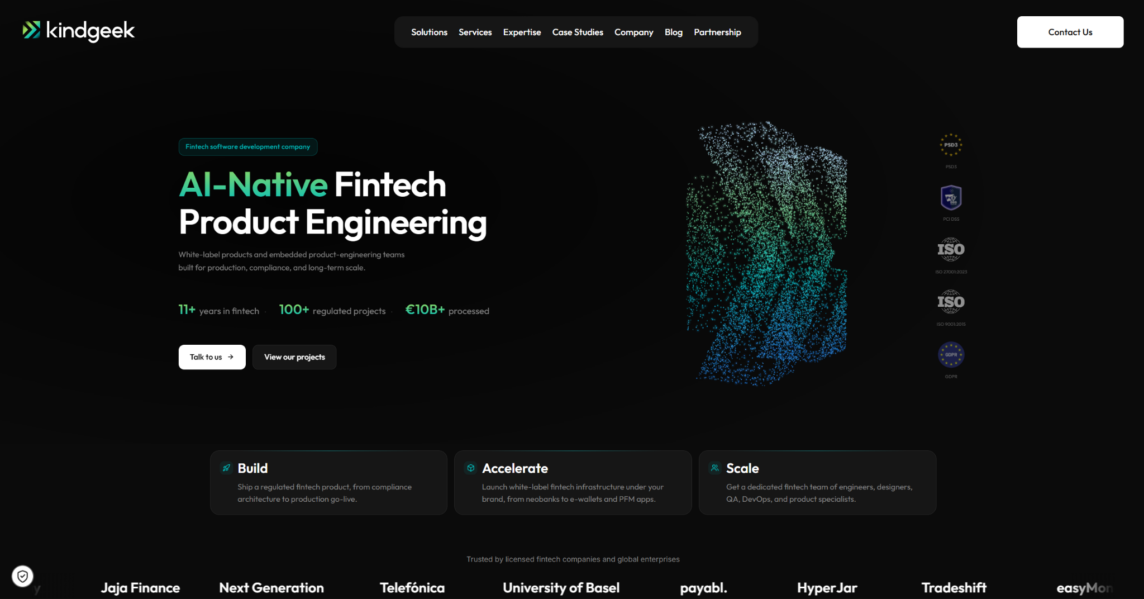
Kindgeek is a fintech product engineering company relevant for regulated financial products, card issuing, neobanking, and payment systems. Its fintech focus includes card issuing programs, prepaid and credit programs, BIN sponsorship integration, and Visa/Mastercard certification-related work. This makes Kindgeek relevant for teams building finance products where payments, cards, identity, and platform structure need careful handling. The company also works with white-label neobank services, KYC, and AI in fintech. Kindgeek is a good comparison point for regulated fintech product engineering.
Useful When
Kindgeek suits fintech teams building card-related products, neobanking tools, payment apps, or regulated customer-facing finance products. The company is useful when the project needs product engineering around card issuing, KYC, open banking, or payment workflows. Kindgeek’s angle is more product and card-program-oriented than Softjourn’s broader fintech consulting and architecture profile. The company focuses on delivery without exaggeration.
Kindgeek should be framed through regulated product delivery, card programs, and fintech user flows. Key strengths include:
- Card issuing, prepaid, and credit program support;
- BIN sponsorship integration and card network-related workflows;
- Neobanking and white-label financial product development;
- KYC-related user flows and regulated onboarding;
- Fintech product engineering for payment and banking-style apps.
Kindgeek fits teams building regulated, customer-facing fintech products. The company is especially relevant when cards, onboarding, and payment workflows are central to the product.
3. The Software House
The Software House is a technology partner relevant for fintech platforms, payment infrastructure, and compliance-aware product engineering. The company works on payment rails, open banking, PSD2/GDPR-aware systems, SEPA, SWIFT, Faster Payments, ACH, and cross-border transaction workflows. Regulated fintech products often need clean integrations between payment methods, account systems, data flows, and user-facing applications. The Software House is relevant for teams that need engineering around payment infrastructure and financial product connectivity.
Works Well For
The Software House fits projects where payment infrastructure, open banking, and cross-border workflows matter. The company is relevant for EU-focused or international fintech products that need PSD2/GDPR-aware design and reliable transaction flows. Its role is strongest around engineering execution for connected fintech systems and payment-heavy products. Practical and direct.
This section focuses on payment rails, open banking, and regulated connectivity. Key areas include:
- Payment infrastructure and transaction system engineering;
- Open banking and PSD2-aware product development;
- SEPA, SWIFT, Faster Payments, ACH or cross-border payment workflows;
- GDPR-aware financial product architecture and data handling;
- Engineering support for connected fintech platforms.
The Software House is useful when payment connectivity and compliance-aware product design matter. The company fits products where transaction reliability and regulated data flows are central.
4. Modsen
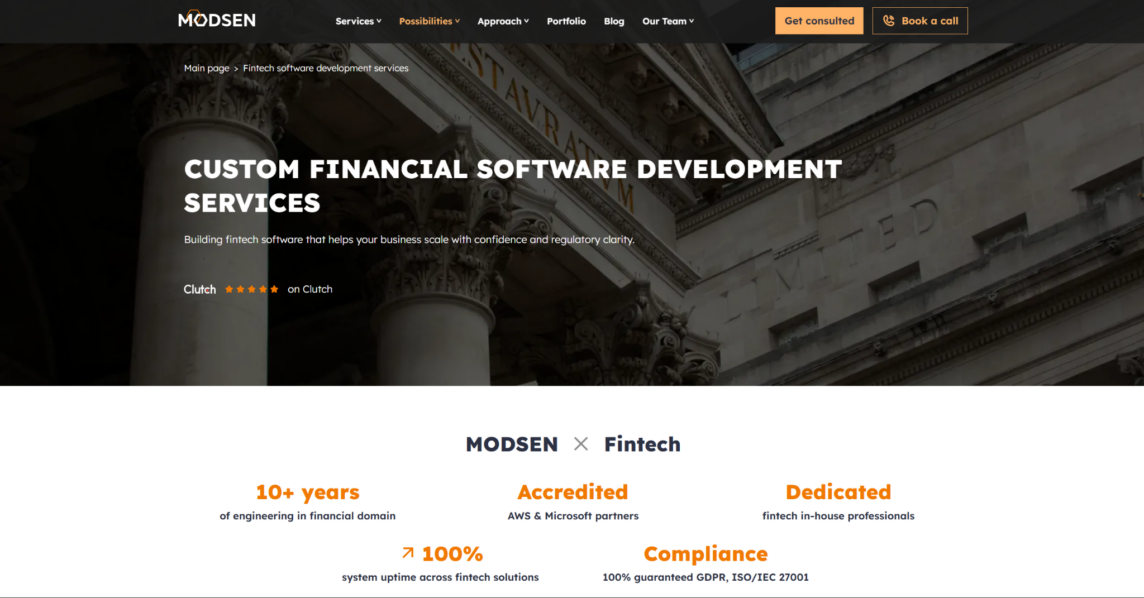
Modsen is an engineering provider relevant for secure financial software, fintech products, and financial platform modernization. The company has a financial-domain engineering background and security-related positioning, including GDPR and ISO/IEC 27001, where appropriate. This makes Modsen relevant for projects where secure delivery, data handling, and platform reliability matter. The company works on internal financial tools, fintech applications, compliance-aware systems, and modernization projects.
Suitable For
Modsen suits financial organizations looking for secure engineering support across fintech products, internal tools, or modernization projects. The company is relevant when the product needs stable architecture, controlled data flows, and security-conscious development. Modsen’s angle is broader, secure financial software delivery, not only payments or card issuing. No narrow specialization here.
Modsen should be framed through security, modernization, and reliable financial software delivery. Key areas include:
- Secure financial software development and modernization;
- GDPR-aware product engineering and data handling;
- Internal financial tools and business-facing fintech systems;
- Platform reliability work for fintech and banking-related products;
- Engineering support for controlled, security-conscious financial workflows.
Modsen is a reasonable option for companies that need secure fintech engineering without a narrow payments-only focus. The company fits especially well when reliability, data handling, and modernization are the main priorities.
5. Azilen
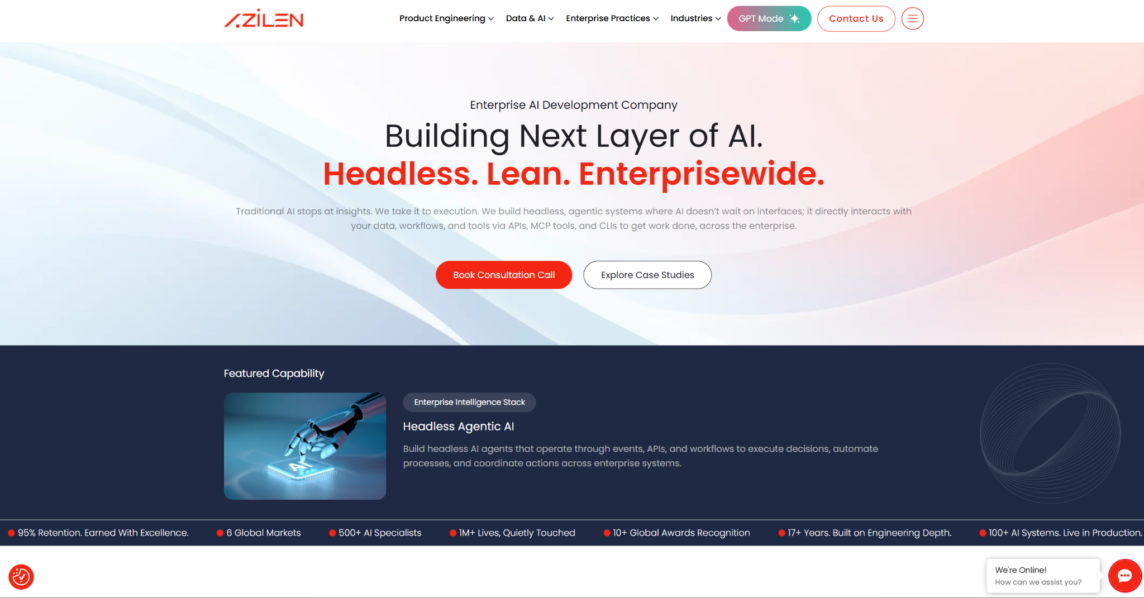
Azilen is a technology partner relevant for fintech platforms, payment systems, digital banking, lending, and financial AI. Its fintech work connects to PCI-DSS, real-time processing, cross-border transactions, fraud detection, and risk assessment. This makes Azilen relevant for products where payments, transaction speed, risk checks, and data-driven decisions matter. The company fits teams building regulated workflows with automation or financial intelligence layers.
Best Use Scenario
Azilen is useful for payment-heavy products, digital banking platforms, credit and lending tools, or fintech products that need financial AI. The company fits projects where fraud prevention, risk scoring, or real-time transaction handling is part of the product. Azilen’s angle is strongest where payments, risk, and automation meet. The company focuses on PCI-DSS, payments, and real-time processing.
Azilen should be framed through payment systems, risk workflows, and financial AI. Key areas include:
- Payment systems and PCI-DSS-aware fintech workflows;
- Digital banking platforms and lending product support;
- Real-time transaction processing and cross-border payment flows;
- Fraud detection, risk assessment, and financial AI features;
- Automation support for regulated financial operations.
Azilen fits fintech products where payments, risk, and automation need to work together. The company is especially relevant when real-time processing and fraud prevention are important to the product model.
Best Fit by Compliance Need
The right company depends on which compliance or regulated workflow creates the biggest product risk. Softjourn is the strongest fit when the work involves payments, cards, banking infrastructure, remittance, open banking, KYC/AML integrations, architecture review, or technical consulting. Kindgeek fits card issuing, neobanking, and regulated customer-facing fintech products. The Software House is more relevant for payment rails, open banking, and cross-border transaction systems.
Modsen works better for secure financial software, internal tools, and modernization. Azilen fits payment-heavy products involving PCI-DSS, real-time processing, fraud detection, and financial AI. Compare companies by regulatory context, security expectations, transaction logic, integration needs, and long-term maintainability.
Final Thoughts
Compliance-aware fintech engineering is not only about passing checks or adding legal text to a product. Regulated financial systems need strong architecture, secure transaction logic, reliable integrations, and clear operational workflows. Softjourn stands out when the project involves payments, card systems, banking infrastructure, remittance, open banking, KYC/AML workflows, and consulting-heavy fintech modernization.
Kindgeek, The Software House, Modsen, and Azilen each fit different regulated fintech scenarios. Kindgeek is useful for card issuing and neobanking. The Software House fits payment rails and open banking. Modsen works for secure financial software and modernization. Azilen is relevant for payments, fraud detection, and financial AI. Choose based on the regulated workflow that creates the highest technical and operational risk. That is how you avoid expensive mistakes.