
 0
0
 0
0
Crypto and stablecoins have quietly integrated into real payment processes. Payroll systems use them. Cross-border vendor payouts use them. Treasury operations move millions in USDC every day. This isn’t experimental anymore. It’s working infrastructure.
The problem? Companies end up with fragmented solutions. One vendor handles the on-ramp. Another does payouts. A third manages custody. Different tools own different slices of the money flow. The market isn’t one thing. It’s a stack of specialized layers. Below, we break down six companies. Each plays a distinct role.
Top Platforms Powering Crypto and Fiat Payment Infrastructure
The companies listed below aren’t direct competitors. They solve different problems. One handles full-stack infrastructure. Another focuses on stablecoin settlement. A third prioritizes custody and security. Your use case determines which one matters.
What looks similar on the surface often behaves very differently in production. Some platforms are built for high-volume transaction flows. Others are optimized for security or regulatory alignment. Integration depth, regional coverage, and settlement logic vary more than most teams expect. That’s why choosing the wrong layer can break your entire payment workflow. The sections below break down where each provider fits and when it actually makes sense to use them.
1. Paybis Ltd
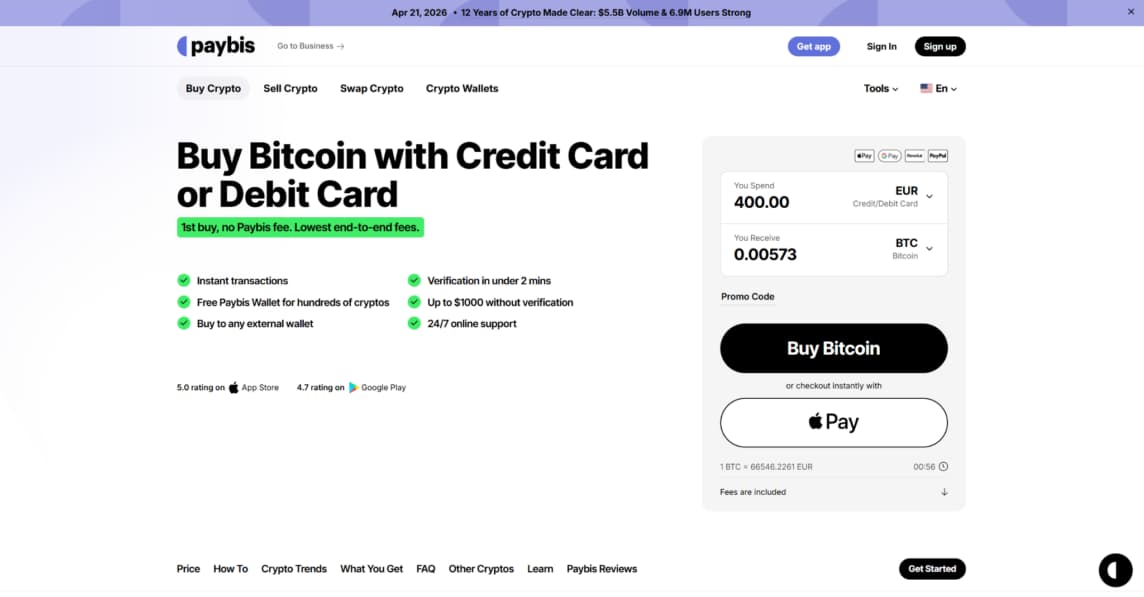
Paybis brings crypto and fiat operations into one system for businesses working with digital and traditional currencies. It combines on-ramp, off-ramp, payouts, payment processing, and wallet-as-a-service into a single environment. Instead of stitching together multiple vendors, companies can manage the full money flow in one place. The system works with both fiat and crypto natively, without requiring separate integrations. This makes it easier to handle complete payment cycles rather than isolated transactions.
Using Paybis reduces your dependency on multiple providers. The API and dashboard give you control over payment flows, payouts, and wallet infrastructure. Regional coverage is solid. Currency support is broad. The system scales as transaction volume grows.
Full Infrastructure and Financial Flow Management
Most businesses end up managing five different vendor relationships. Paybis compresses that stack. Fewer integrations mean fewer failure points. A single system also simplifies reconciliation because money doesn’t bounce between three platforms before settling.
Core Features and Infrastructure Scope:
- Fiat-to-crypto and crypto-to-fiat on-off-ramp infrastructure;
- Global crypto and fiat payouts via API and dashboard;
- Support for payment processing and crypto acquiring;
- White-label wallets and embedded financial flows;
- Coverage across multiple regions, currencies, and payment methods.
For companies that need centralized infrastructure rather than a patchwork of point solutions, Paybis works well.
2. Stripe

Stripe needs no introduction in payments. The company has expanded into stablecoin settlements using its existing global infrastructure. This matters for enterprise businesses that already run on Stripe and want to add crypto without rebuilding their payment stack.
Stripe integrates crypto flows into systems you already use. That’s the selling point. No new vendor. No separate reconciliation. Just an additional settlement option on familiar rails. The scalability is proven at massive volumes.
Payment Rails and Enterprise Integration
Stripe builds crypto features around existing payment processes. Adding stablecoins doesn’t require a full system overhaul. You keep your current workflows. You just gained another settlement method. Stability matters here. Businesses don’t want to experiment with mission-critical payment infrastructure.
Payment Capabilities and System Integration:
- Support for fiat and stablecoin payment flows together;
- Integration with the existing payment infrastructure you already use;
- Global payment network with established processing tools;
- Advanced reporting and transaction management features;
- Enterprise-level scalability and proven reliability.
For companies already on Stripe, this is the path of least resistance.
3. Circle

Circle issues USDC. That’s the foundation. But the company also provides stablecoin infrastructure for treasury management, global settlements, and B2B payments. USDC has become the default stablecoin for business use, not just trading.
Circle focuses on financial flows, not consumer UX. The API gives you access to stablecoin issuance, redemption, and transfer capabilities. Transparency is baked in. Regular attestations and regulatory compliance matter for enterprise adoption.
Stablecoin Infrastructure and Settlement
Working with stablecoins requires predictable infrastructure, and Circle is built around that requirement. You don’t have to guess about reserves or worry about sudden de-pegging events. The platform focuses on consistent issuance, redemption, and transfer processes across different markets. Its tools are designed for treasury teams managing real financial flows.
Stablecoin Features and Financial Tools:
- USDC issuance and stablecoin infrastructure;
- Tools for treasury and liquidity management;
- Support for global settlements and cross-border transfers;
- API access for financial operations at scale;
- Regulatory-focused approach with public transparency.
For businesses building around stablecoins, Circle is the primary infrastructure provider.
4. Fireblocks
Fireblocks focuses on asset custody and transaction security. The company built its reputation on MPC technology that eliminates single private key vulnerabilities. This is institutional-grade stuff. Banks use it. Hedge funds use it. Large crypto-native companies use it.
Security isn’t a feature for Fireblocks. It’s the whole product. The platform handles transaction approval workflows, treasury management, and integrations with exchanges and liquidity providers.
Custody and Asset Security
Handling large crypto balances introduces significant operational risk. Fireblocks addresses this through structured transaction workflows and layered security controls. Instead of relying on a single approval, it uses policies, multi-step authorization, and audit tracking. This level of control becomes essential when managing high-value transfers and treasury operations.
Security Features and Asset Management Tools:
- MPC-based custody and asset protection across chains;
- Secure transaction approval workflows for teams;
- Treasury and asset management tools for operations;
- Integration with exchanges and liquidity providers;
- Institutional-grade security infrastructure with certifications.
For companies with high security requirements or significant asset holdings, Fireblocks is the standard.
5. BitPay

BitPay processes crypto payments for merchants. The use case is straightforward: accept Bitcoin, Ethereum, or stablecoins at checkout. Convert to fiat if you don’t want crypto exposure. The integration works with major e-commerce platforms like Shopify and WooCommerce.
BitPay simplifies crypto acceptance. You don’t need to build blockchain infrastructure. You don’t need to manage volatility risk through conversion.
Crypto Payment Processing
BitPay focuses on processing transactions rather than managing treasury operations. Merchants receive payments in crypto or have them automatically converted into local fiat. The platform handles the underlying complexity, so businesses don’t need to manage blockchain infrastructure directly. This makes it easier to add crypto payments without changing existing workflows.
Merchant Payment Features:
- Crypto payment acceptance for merchants online;
- Conversion of crypto to fiat currencies automatically;
- Integration with major e-commerce platforms;
- Support for multiple cryptocurrencies, including stablecoins;
- Transaction tracking and reporting tools for accounting.
For e-commerce businesses that want to accept crypto without building custom infrastructure, BitPay does the job.
6. Wyre
Wyre provides API infrastructure for crypto and fiat operations. The company focuses on on-ramp functionality but offers broader payment and transfer support. Fintech and Web3 platforms integrate Wyre to add crypto capabilities without hiring blockchain engineers.
Developer experience is the priority here. Clean APIs. Good documentation. Flexible infrastructure that adapts to different product needs.
API Infrastructure and On-Ramp
Wyre provides modular tools that product teams can integrate based on their specific needs. Instead of a fixed solution, it offers flexible components that can be combined into custom workflows. The API-first approach enables faster development and easier iteration. This gives teams more control over how crypto functionality fits into their product experience.
API Features and Integration Tools:
- API-based fiat-to-crypto on-ramp solutions;
- Integration with fintech and Web3 platforms;
- Global payment and transfer support across currencies;
- Developer-focused documentation and testing tools;
- Flexible infrastructure for product teams to build on.
For development teams that want to embed crypto functionality quickly, Wyre is a solid choice.
How to Choose the Right Infrastructure Platform
Your business model decides the infrastructure you need. A crypto exchange needs different tools than an e-commerce store. A payroll company needs different flows than a treasury desk. There’s no universal solution here.
Map your money movement first. Then look for platforms that match that map. Don’t start with features. Start with the actual transaction types you need to support.
When choosing the right infrastructure platform, focus on:
- Business model and use case requirements (on-ramp, payouts, custody, processing);
- Geographic coverage and payment methods your customers actually use;
- Integration complexity and the engineering resources you have available;
- Compliance and regulatory requirements in your operating jurisdictions;
- Transaction volume and scalability needs from day one to year three.
The right choice reduces operational risk. The wrong choice creates integration debt that takes years to unwind.
Final Thoughts
The crypto and fiat infrastructure market isn’t one thing. It’s a stack of specialized tools. Paybis does full-stack. Circle does stablecoins. Most companies combine two or three providers. That’s okay. Pick for the specific job, test production flows thoroughly, then scale what actually works. No single platform does everything well, and pretending otherwise just creates integration headaches down the road.