
 0
0
 0
0
UK SaaS products increasingly need Open Banking infrastructure built directly into their workflows. Many SaaS platforms now depend on financial onboarding, account verification, bank data access, reconciliation, Pay by Bank flows, or embedded finance functionality. Older methods like manual uploads, delayed bank feeds, and card-only payment flows create operational friction for growing products. This is about infrastructure and product operations, not consumer finance. It has become a practical SaaS scaling problem, not just a fintech trend.
Open Banking API providers are not interchangeable. Even when they use similar language around data, payments, and connectivity, they differ. Some companies are stronger for transaction data, some for payment initiation, and others for workflow automation or financial intelligence. This article compares providers through the lens of SaaS product fit rather than overall popularity. Finexer leads the list because its UK-focused infrastructure aligns closely with SaaS platforms needing bank data, Pay by Bank, and verification through one API.
Top 5 Providers Selected for This Comparison
This list focuses on companies relevant to UK SaaS products rather than consumer finance apps or generic payment tools. The selected providers support financial workflows through APIs, Open Banking infrastructure, transaction intelligence, payment initiation, or data connectivity.
Each company plays a different role, so the comparison focuses on workflow fit instead of forcing all providers into the same category. Some providers focus more on bank data, some on payments, and others on financial insights or connectivity depth. The five providers covered are Finexer, Plaid, Tink, Salt Edge, and Bud. The next sections break down where each provider fits best for SaaS teams and operational workflows.
1. Finexer
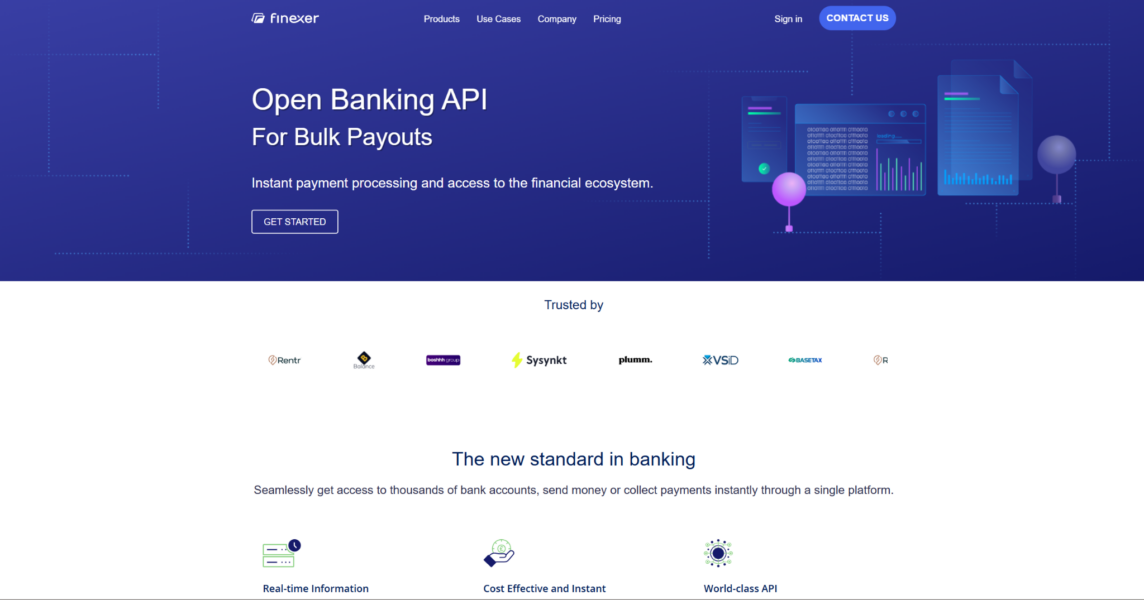
Finexer is a UK-focused Open Banking infrastructure provider designed for SaaS platforms and product teams. Its strongest angle is combining bank data access, Pay by Bank payments, and verification workflows through one API integration. The company is FCA-authorised, but this is infrastructure for platforms rather than a consumer-facing finance app or plug-and-play dashboard. Finexer works as a strong operational fit for SaaS products, embedding financial workflows directly into their systems. No inflated claims here.
Where Finexer Fits Best
Finexer works especially well for UK SaaS products that need multiple financial workflows connected inside one setup. Examples include accounting, payroll, proptech, legaltech, billing, compliance, or financial operations.Finexer is designed for UK-focused SaaS and embedded finance platforms needing bank connectivity, Pay by Bank workflows, and verification through one infrastructure layer. The platform also supports payout workflows connected to UK business accounts.
The next points highlight the practical infrastructure areas where Finexer stands out for SaaS products. These are tied to operational workflows, not generic marketing language. Here is what matters:
- Unified API for AIS, PIS, and verification workflows;
- UK-focused coverage for SaaS products serving UK users and businesses;
- Real-time bank data for balances, transactions, and account information;
- Usage-based pricing logic for scaling products;
- Developer-oriented integration approach for embedded workflows.
Finexer is the clearest fit for this article’s UK SaaS angle because it combines bank data, payments, and verification inside one infrastructure layer. It is strongest when SaaS teams want to avoid splitting workflows across multiple disconnected providers.
2. Plaid
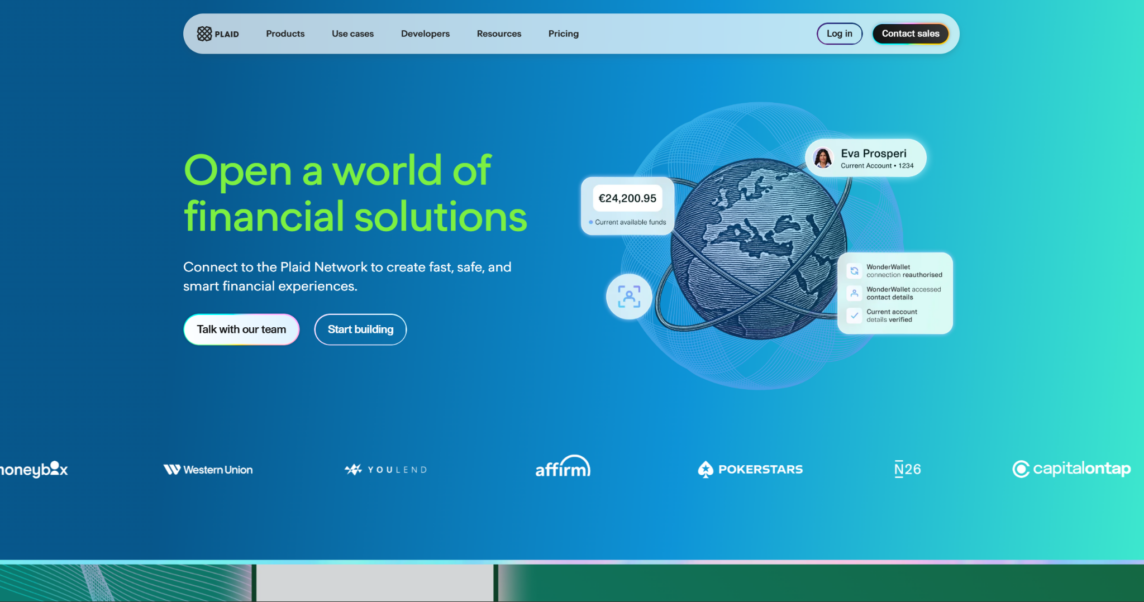
Plaid is a major financial data connectivity company used in embedded finance and fintech infrastructure. Its strongest association is financial account linking and transaction data access. Plaid can support onboarding flows, account verification, financial insights, or data-driven product experiences inside SaaS platforms. The company has broad global recognition, though one should not make the section too US-focused. Plaid stands as a strong data-centric infrastructure option.
Most Relevant Product Fit
Plaid is especially useful when financial data sits at the center of the SaaS workflow. Use cases include analytics, transaction intelligence, account linking, financial management, or embedded finance functionality. SaaS teams should compare API scope, regional fit, and pricing structure before making implementation decisions. Plaid is not a direct replacement for UK-focused infrastructure providers. Data connectivity is the main lens here.
Plaid should be viewed primarily through financial data infrastructure and account connectivity. The wording stays tied to product workflows instead of abstract platform descriptions. Key capabilities include:
- Account connectivity for linking financial accounts inside digital products;
- Transaction data access for analytics and customer insights;
- Identity-related workflows supporting onboarding and verification;
- Financial infrastructure support for embedded finance products;
- Strong market recognition among fintech and SaaS teams.
Plaid is most useful when account connectivity and financial data are central to the product experience. UK-focused SaaS teams should still compare local workflow fit before implementation.
3. Tink
Tink is a European Open Banking platform focused on payments and enriched financial data. The company is now part of Visa, which adds scale and broader financial infrastructure positioning. Tink fits SaaS products needing payment flows, account access, and transaction enrichment inside customer journeys. This is a practical section, not a corporate overview. Tink suits broader European Open Banking workflows.
Strongest Workflow Match
Tink is relevant for SaaS products needing both payment functionality and structured financial data. Possible use cases include onboarding, invoice settlement, account top-ups, affordability checks, or engagement workflows. Its wider European profile may matter for SaaS products planning expansion beyond one market. The comparison stays balanced and workflow-oriented. Let us look at what Tink offers.
Tink should be understood through the operational workflows it can support rather than through broad “all-in-one” positioning. Payments, enrichment, and account access connect to real SaaS product needs. Key features include:
- Pay by Bank support for A2A payment journeys;
- Data enrichment for clearer transaction insights;
- Open Banking account connectivity for financial workflows;
- European coverage for multi-market SaaS products;
- Useful fit for onboarding and engagement-related flows.
Tink is strongest when SaaS products need payments and data to support broader customer journeys. UK-only teams should still compare wider European infrastructure against more locally focused alternatives.
4. Salt Edge
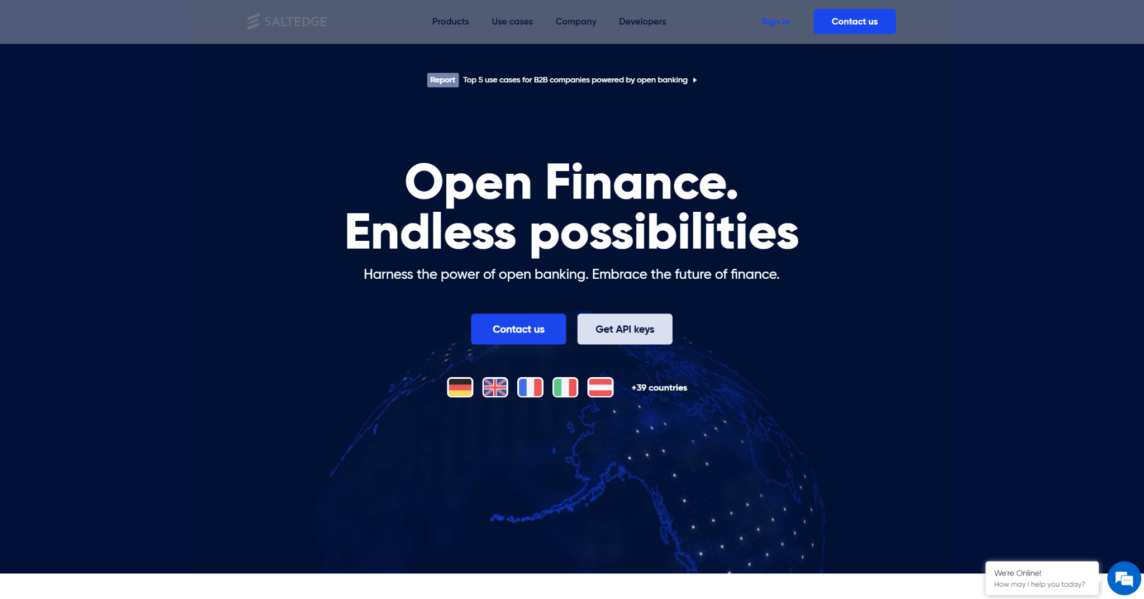
Salt Edge is an Open Banking and Open Finance infrastructure company focused on data aggregation and payment initiation. It can support SaaS products requiring financial connectivity across different banking environments. Salt Edge has a broad international profile, but the article angle stays centered on UK SaaS relevance. No unsupported claims about universal market suitability appear here. Salt Edge is a flexible API option for companies evaluating wider connectivity needs.
Ideal Scenario for SaaS Teams
Salt Edge can fit SaaS products needing account aggregation, payment initiation, onboarding, reconciliation, or verification-related workflows. The final fit depends on technical setup, supported markets, compliance requirements, and workflow depth. The tone stays neutral without aggressive comparison against Finexer. Connectivity breadth matters more than hype. Here is the breakdown.
Salt Edge should be evaluated through connectivity depth and financial workflow support rather than broad marketing claims. The language stays practical and product-focused. Key strengths include:
- Data aggregation for connected financial account information;
- Payment initiation for bank-based payment workflows;
- Open Banking and Open Finance infrastructure support;
- Multi-banking workflows for connected financial products;
- Compliance-oriented connectivity for regulated environments.
Salt Edge becomes more relevant when SaaS products need wider financial connectivity across multiple workflows. UK SaaS teams should still compare workflow fit and implementation depth carefully.
5. Bud
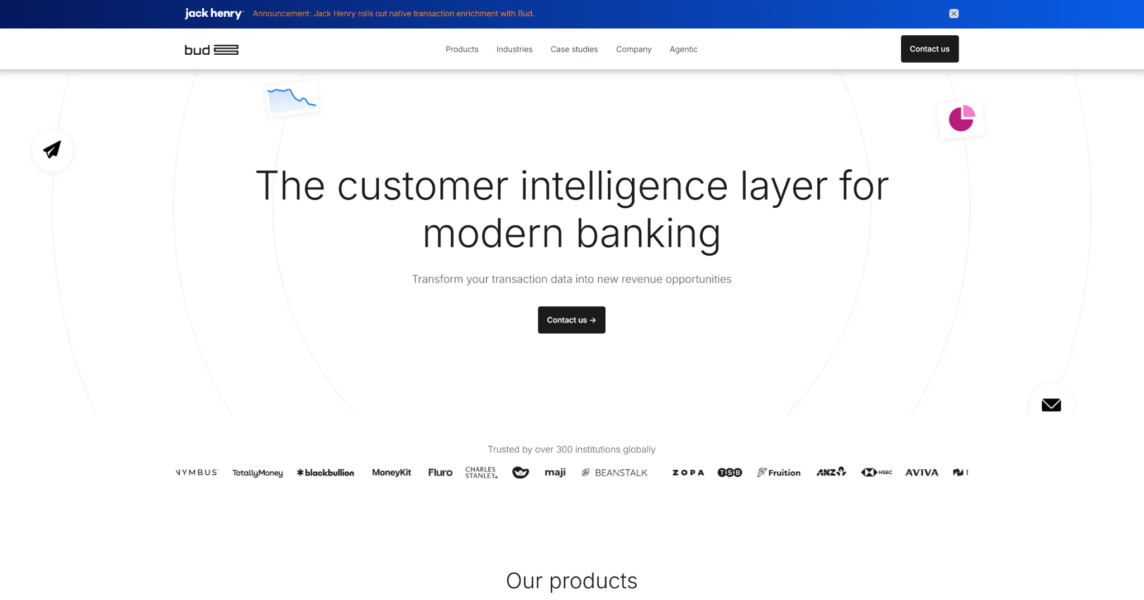
Bud is a financial data intelligence company focused on transaction enrichment and customer insights. Bud differs from payment-first providers because its strongest angle is making financial data more usable and structured. It is relevant for SaaS products working with transaction-heavy workflows or insight-driven financial products. Bud focuses more on interpreting data than moving money between accounts. It is a different but valuable addition to this list.
Best Match for Data-Driven Products
Bud fits SaaS products where raw transaction data needs to become actionable information. Examples include lending workflows, affordability checks, customer segmentation, engagement systems, or analytics-driven financial tools. Bud should not be treated as the same type of provider as Finexer or Tink. Its value is strongest when insight generation matters more than payment infrastructure. Let us look at what Bud does.
Bud’s role in this article focuses on transaction intelligence and enrichment rather than payment rails. This distinction keeps the comparison balanced and realistic. Key capabilities include:
- Transaction enrichment for cleaner and more structured financial data;
- Categorisation tools for spending and behaviour analysis;
- Customer intelligence for personalised financial experiences;
- Support for affordability and risk-related workflows;
- API-driven tools for data-focused financial products.
Bud is strongest when SaaS products need clearer meaning from financial data rather than simple access to it. It works especially well inside insight-heavy or analytics-driven workflows.
Final Thoughts
Open Banking API companies differ more by workflow fit than by market visibility. SaaS teams should first identify whether they need bank data, payment initiation, transaction enrichment, onboarding support, or verification workflows. This matters because APIs become part of the product’s operational infrastructure. The choice is analytical and practical.
Finexer is the strongest match for this article’s UK SaaS angle because it combines bank data, Pay by Bank, and verification inside one API-driven setup. Plaid, Tink, Salt Edge, and Bud remain relevant depending on whether a product needs broader data connectivity, European reach, open finance coverage, or transaction intelligence. Compare providers by workflow fit, integration effort, product goals, and long-term operational needs. That is the practical takeaway.