 0
0
 0
0
Travel phrases only help if you can remember them fast enough in a real situation. You land at the airport, need a taxi, order food, or ask for directions. Suddenly, your brain goes blank. A good travel app should not just show phrases. It needs to help with pronunciation, repetition, and quick recall under pressure. These six apps approach travel language differently: guided lessons, phrasebooks, native-speaker audio, offline access, and short practice tools. Here is how they compare.
1. Promova
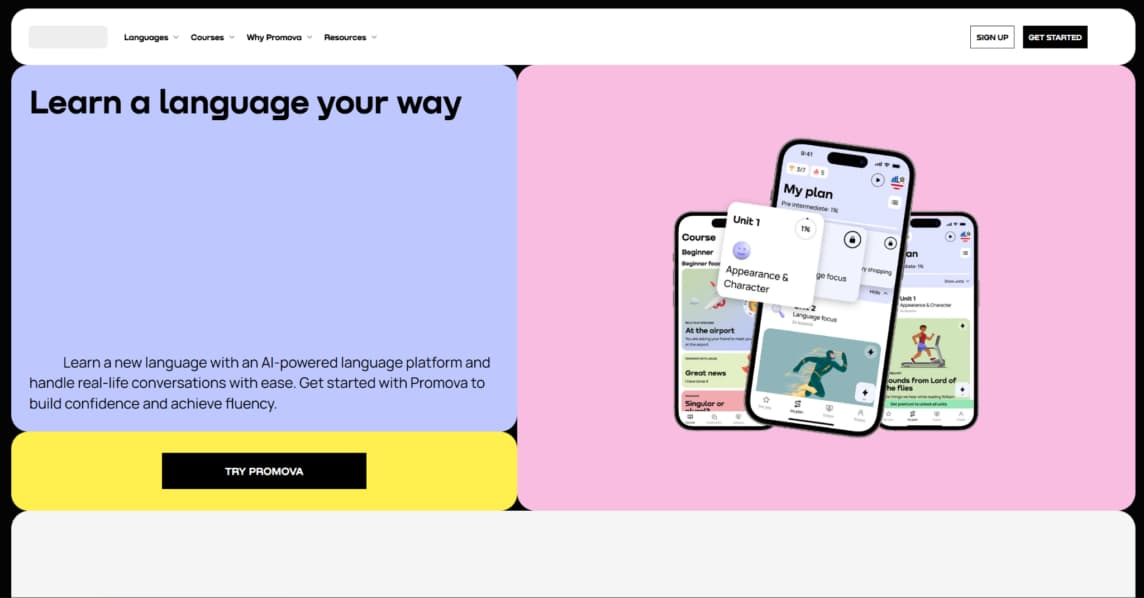
Promova supports language learning for travel with guided lessons, AI speaking practice, role-play tasks, and teacher-made content for real trip situations. The app works for travel phrases because it does not treat them as a static list you read once. Guided lessons, AI Tutor, AI speaking practice, AI conversations, role-play tasks, and teacher-made content all work together. You can practice airport, hotel, cafe, transport, and daily travel situations before you actually need them. Dyslexia Mode 2.0, White Noise Mode for ADHD learners, and ASL support different learning needs. That matters when you are stressed and trying to study before a trip.
Travel language often fails because people only memorize phrases silently. In a real trip, you need to hear, answer, repeat, and choose the right phrase fast. Promova connects travel vocabulary with guided practice and speaking tasks. Here is what that looks like:
- AI Tutor: Helps learners ask questions and practice travel phrases before a trip;
- AI speaking practice: Turns common travel language into spoken answers;
- Role-play tasks: Lets users rehearse hotels, cafes, transport, shopping, and directions;
- Teacher-made lessons: Keeps travel practice structured instead of random;
- Accessibility tools: Dyslexia Mode 2.0, White Noise Mode, and ASL support different study needs.
Promova takes first place because it connects travel phrases with speaking practice, guided lessons, AI support, and accessibility. Best for travelers who want to practice situations before they happen.
Best Match for Trip Preparation
Promova fits people who want more than a phrase list. Useful when a traveler wants to practice saying phrases out loud and answering in simple situations. A strong option for learners who want travel language to feel usable, not just saved in an app.
2. uTalk
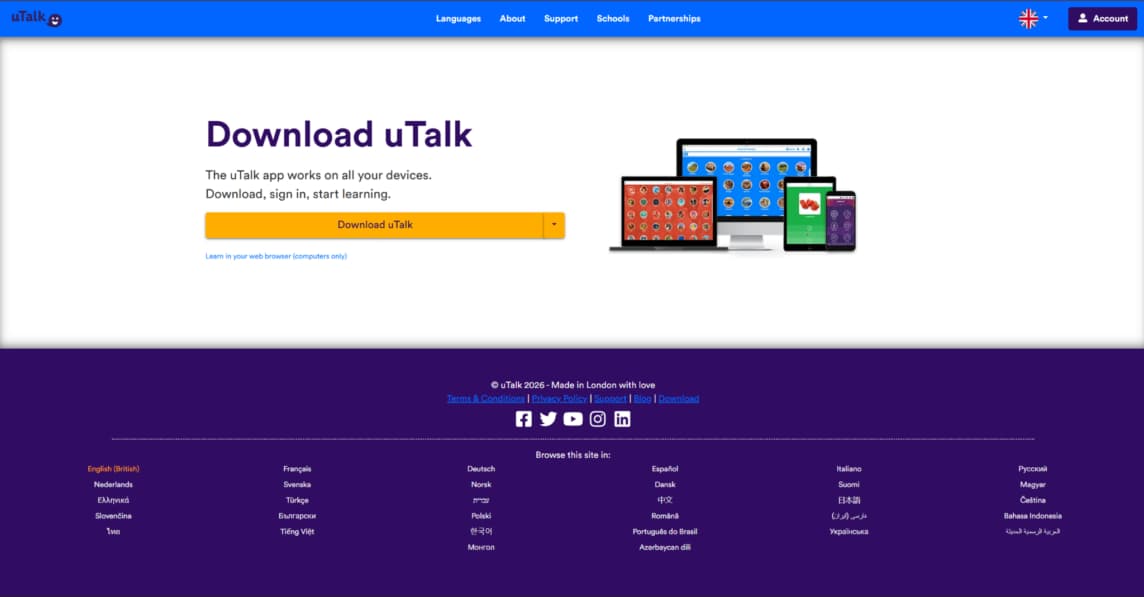
uTalk is a practical app for keywords and everyday phrases across 160+ languages. Native-speaker audio and everyday topics make it work. It is good for travelers who need basic language skills before visiting a place where they do not speak the local tongue. uTalk stays phrase-and-topic focused. Promova gives broader guided learning and AI speaking practice. uTalk fits people who want quick access to useful travel language across many destinations.
Travel language does not always need a full course. Sometimes the first goal is to recognize key words and say simple phrases clearly. uTalk keeps practice close to everyday situations. Here is the breakdown:
- Keywords and phrases: Helps travelers cover basic needs before a trip;
- Native-speaker audio: Gives users clearer pronunciation examples;
- Everyday topics: Covers practical areas like food, transport, numbers, and shopping;
- Large language range: Makes the app useful for less common travel destinations.
uTalk is a solid option when the main need is simple travel language in many languages. Strongest for early preparation, not deep speaking practice.
Best Choice for Broad Language Coverage
uTalk suits travelers who visit different countries and need a quick start in each language. Useful when someone wants the basics before landing. Works best when travelers need survival vocabulary and pronunciation, not a full learning path.
3. Simply Learn
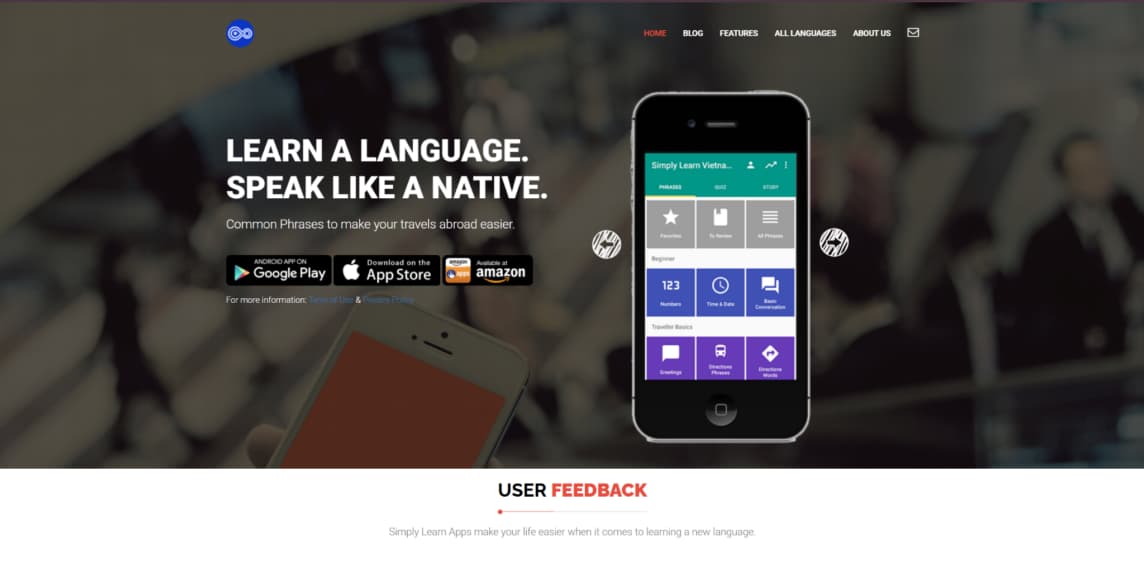
Simply Learn works like a travel phrasebook with categories, audio, flashcards, and quick search. Over 1000 phrases. More than 30 categories. Native-speaker recordings, flashcards, quizzes, and quick search. It is useful when travelers want prepared phrases for predictable situations. Simply Learn is less about building a full language base and more about finding the right phrase quickly. It fits people who need practical phrase access before and during a trip.
Trips create repeatable language moments. You may need to ask where something is, order food, check prices, or explain a small issue. A category-based phrasebook makes those moments easier to prepare for. Here is what you get:
- Phrase categories: Help users find language for common travel situations;
- Native recordings: Let travelers hear how phrases should sound;
- Flashcards and quizzes: Support light review before the trip;
- Quick search: Helps users find a phrase when they need it fast.
Simply Learn is helpful when travelers want prepared phrases without a heavier course. Works best as a phrasebook and quick-reference tool.
Best Pick for Ready-Made Phrases
Simply Learn fits travelers who want direct phrases, not long lessons. Useful for people who prefer categories and quick search over a broader study. Works best when the goal is practical communication in predictable travel moments.
4. iTranslate
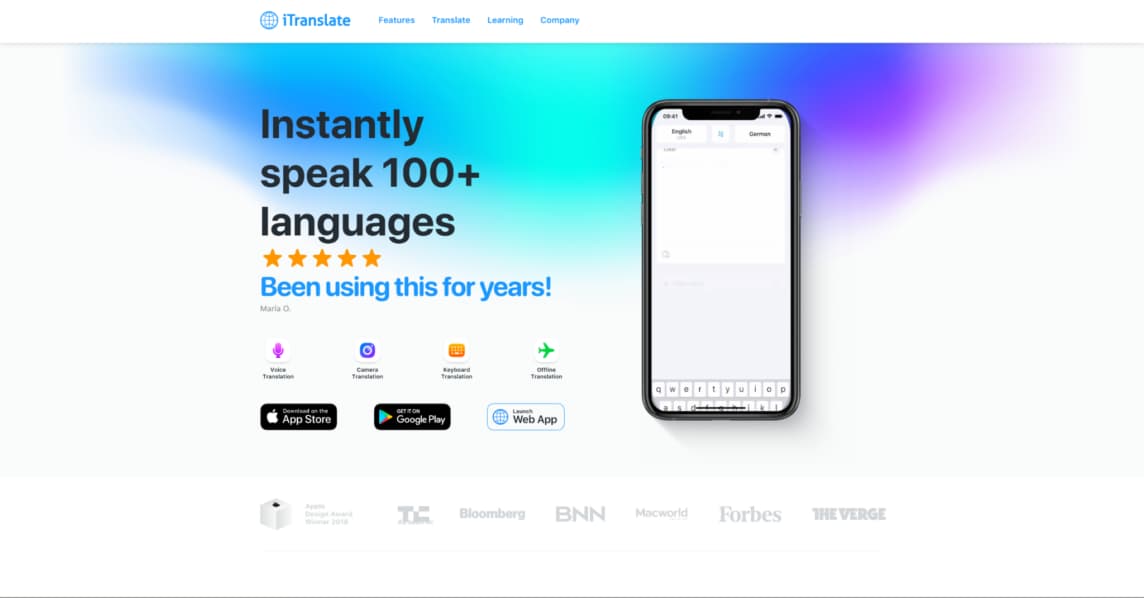
iTranslate is a travel language tool for people who need quick translation support abroad. It works better as a trip companion than as a classic learning app. Travelers can use it for text translation, voice translation, camera translation, offline translation, and phrase support. That makes it useful in situations where prepared phrases are not enough, like menus, signs, transport questions, or sudden conversations. Promova is stronger for guided travel practice, while iTranslate is stronger for fast help during the trip.
Travel language does not always follow a script. You may know basic phrases, but then need to translate a menu, understand a sign, or respond to something unexpected. iTranslate helps in those moments because it gives several ways to handle language quickly. Here is the breakdown:
- Text translation: Helps travelers translate words, short phrases, and messages quickly;
- Voice translation: Supports spoken exchanges when typing is too slow;
- Camera translation: Helps with menus, signs, cards, and printed text;
- Offline mode: Keeps translation available when internet access is weak or expensive.
iTranslate is useful when travel language needs to be handled fast. It works best as a translation and phrase support tool, not as a full study system.
Best Option for Quick Translation Abroad
iTranslate fits travelers who need help during the trip, especially in moments that are hard to prepare for. It is useful for menus, signs, short conversations, and quick checks when the right phrase is not already saved. Its main value is fast translation support across text, voice, camera, and offline use.
5. SpeakEasy
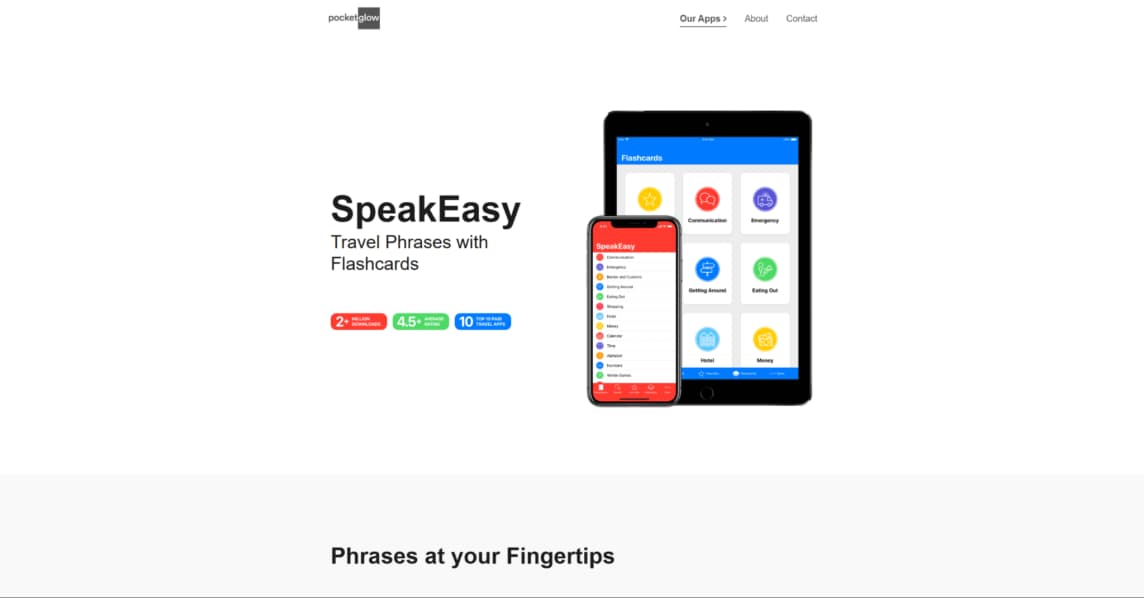
SpeakEasy is an offline phrasebook with native-speaker audio and slow playback. No internet required. Native-speaker audio. Slow-play audio. It is useful for travelers who want to hear and repeat phrases before saying them. Slow playback helps you catch sounds you might miss at normal speed. SpeakEasy fits people who want a reliable phrasebook when mobile data is not guaranteed.
Pronunciation becomes stressful when you have only one chance to say something clearly. Offline audio helps because you can listen again without Wi-Fi or data. Slow playback makes phrases easier to imitate. Here is what it offers:
- Offline phrase access: Keeps useful language available without internet;
- Native-speaker audio: Helps travelers copy clearer pronunciation;
- Slow playback: Makes difficult phrases easier to hear and repeat;
- Simple phrasebook format: Keeps the app focused on quick travel use.
SpeakEasy works well for travelers who care about pronunciation and offline access. Strongest when users need phrases they can hear, repeat, and use without a connection.
Best Fit for Offline Pronunciation Support
SpeakEasy suits travelers who want audio they can trust without internet. Useful before speaking to hotel staff, taxi drivers, or restaurant workers. Best when pronunciation support matters more than full language learning.
6. Nemo
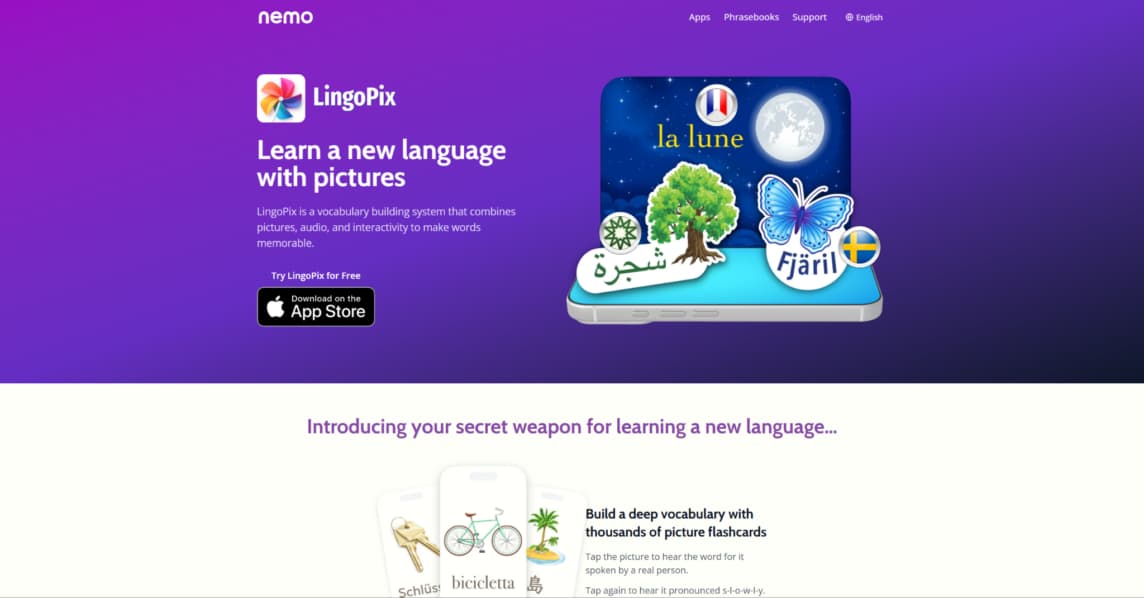
Nemo helps travelers learn essential words and phrases with native-speaker audio and offline practice. Essential travel words and phrases. Native-speaker audio. Speech Studio. Offline access. It is useful for learners who want to practice a small set of practical phrases before traveling. Nemo is less about a full course and more about first-use language. It fits people who want light preparation and pronunciation practice.
Not every traveler wants to study a language deeply before a trip. Some people only need the first phrases that help them be polite, ask simple questions, and understand basic replies. Nemo supports that lighter preparation style. Here is the breakdown:
- Essential phrases: Helps travelers focus on the language they are likely to need first;
- Native audio: Gives clear examples for pronunciation practice;
- Speech Studio: Lets users work on how they sound;
- Offline access: Keeps practice available during travel.
Nemo is useful for travelers who want first phrases and pronunciation practice without a heavy app. Works best as a light travel-prep tool.
Best Use for First Travel Words
Nemo suits people who want a small but practical set of words before a trip. Helpful when the goal is basic politeness, directions, food, and simple exchanges. Works best for light preparation rather than structured long-term study.
Final Thoughts
Travel phrase apps should help you act quickly, not just collect phrases. Promova takes first place because it connects travel language with guided lessons, AI speaking practice, AI Tutor support, role-play tasks, teacher-made content, and accessibility tools. uTalk and Nemo are useful for essential words and many languages. Simply Learn and Bravolol work better as phrasebook-style tools. SpeakEasy stands out when offline audio and pronunciation support matter most. Choose the app based on whether you need to prepare before the trip, find phrases during the trip, or practice saying them clearly.