 0
0
 0
0
Application security used to be much easier to categorize. There were tools for static analysis. Tools for dependency scanning. Tools for penetration testing. Tools for cloud security.
Every category had its own specialists, and most security teams accepted that managing several products was simply part of the job.
That model made sense when software environments were simpler. Modern development environments rarely fit neatly into individual security categories. A single application may involve hundreds of open-source dependencies, cloud infrastructure, APIs, containers, CI/CD pipelines, infrastructure-as-code templates, AI-generated code, and multiple deployment environments.
Security risks move across all of them. As a result, security platforms have started evolving in the same direction.
Many organizations are no longer looking for the best SAST tool or the best dependency scanner. They are looking for a platform that connects security data across the software lifecycle and helps answer a much more practical question:
What should we fix first? That shift explains why all-in-one application security platforms continue attracting attention from security leaders, engineering managers, and DevSecOps teams.
Interestingly, many companies that begin researching Snyk alternatives eventually find themselves evaluating this broader category instead.
What Actually Makes an AppSec Platform “All-in-One”?
The term appears everywhere. Not every vendor means the same thing. Some platforms combine a few security capabilities and market themselves as all-in-one solutions. Others attempt to provide visibility across the entire application security lifecycle.
The strongest platforms typically cover several of the following areas:
- SAST
- SCA
- Secrets scanning
- Container security
- Cloud security
- IaC security
- Vulnerability management
- Supply chain security
- Runtime protection
- Security posture management
- Remediation workflows
Coverage alone is not enough.
The real value comes from connecting these areas together rather than treating them as separate security programs.
1. Aikido
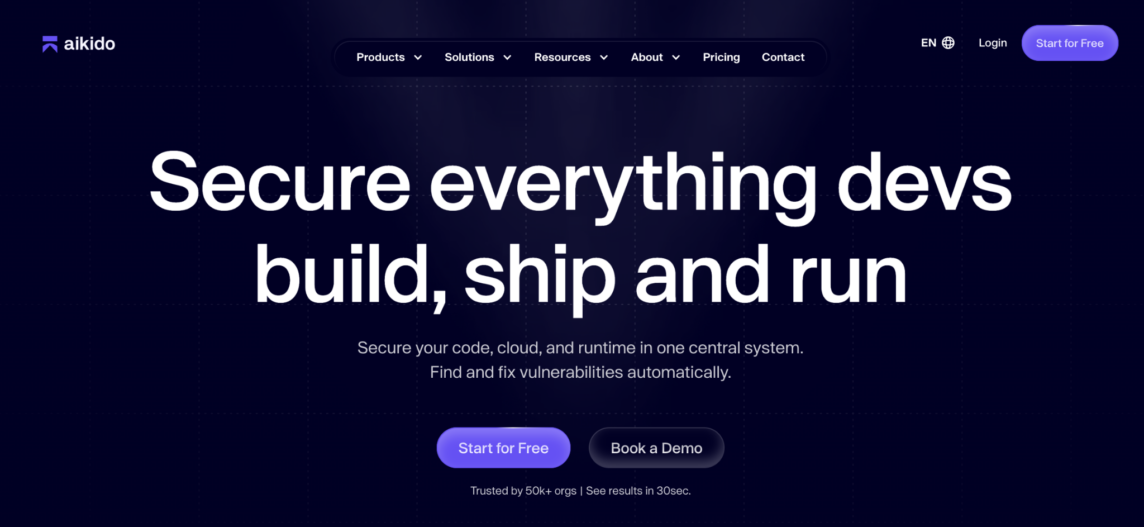
Some vendors built their platforms by assembling multiple products. Others started with a different assumption: Developers would never want to manage ten separate security tools. Aikido is a Snyk alternative that reflects that philosophy.
The platform combines application security, cloud security, runtime protection, supply chain security, vulnerability management, AI-powered pentesting, secrets scanning, malware detection, infrastructure security, container scanning, and remediation workflows within a single environment. Instead of presenting security as a collection of disconnected categories, the platform attempts to provide a unified view of risk.
One of the more notable aspects of the platform is its focus on prioritization. Security teams often have no shortage of findings. What they lack is confidence about which findings deserve attention first.
Aikido addresses that challenge through contextual risk analysis, deduplication, and remediation workflows designed to reduce operational noise. AutoFix capabilities also help accelerate remediation by automatically generating pull requests for common security issues.
Capabilities include:
- SAST
- SCA
- Secrets scanning
- Malware detection
- Cloud security
- IaC security
- Container security
- Runtime protection
- AI pentesting
- SBOM generation
- AutoFix remediation
- Supply chain security
For teams looking to consolidate multiple security functions into a single platform, Aikido is often one of the strongest candidates.
2. Snyk
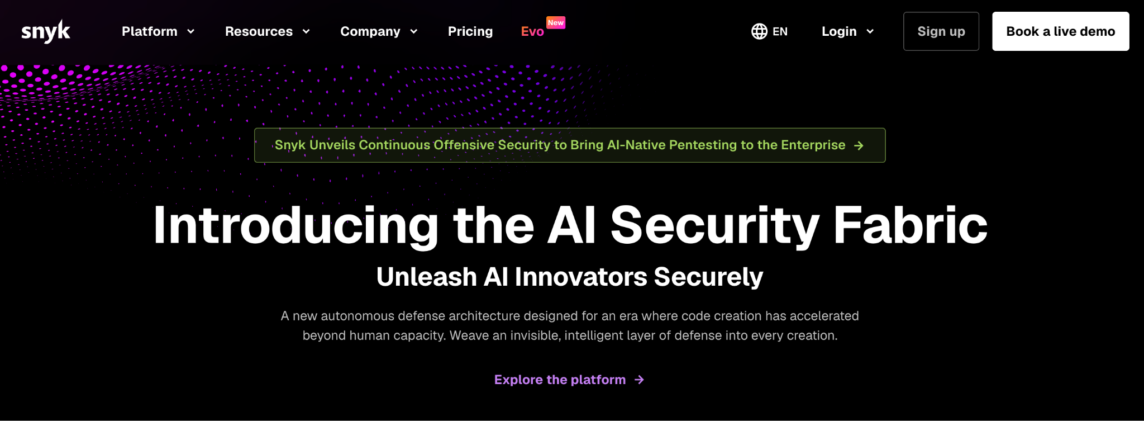
Few companies have influenced the modern AppSec market as much as Snyk. The platform helped popularize the idea that security should move closer to developers rather than remaining entirely within security teams.
Over time, the company expanded well beyond dependency scanning and built a broader application security platform covering multiple categories.
Many organizations evaluating alternatives are doing so precisely because Snyk became a central part of their existing security strategy.
Capabilities include:
- SAST
- SCA
- Container security
- IaC security
- Developer-focused workflows
- Vulnerability management
Snyk remains one of the most recognized names in the AppSec market.
3. Checkmarx One
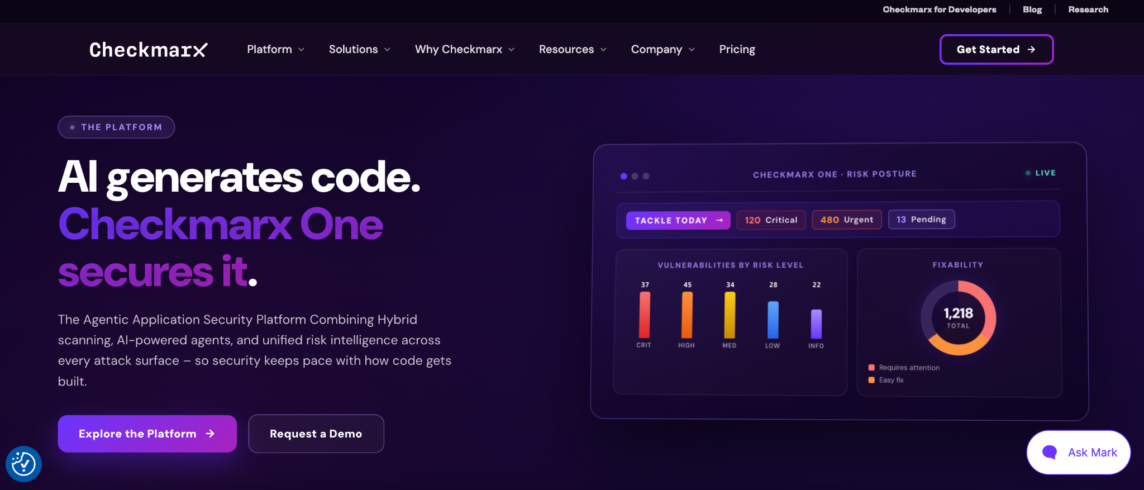
Checkmarx spent years building its reputation around static analysis. The broader platform reflects how much the market has changed.
Modern AppSec programs increasingly expect vendors to cover multiple security categories through a unified experience. Organizations want visibility across development pipelines without stitching together numerous disconnected tools.
Checkmarx One was built with that expectation in mind.
Capabilities include:
- SAST
- SCA
- API security
- IaC scanning
- Container security
- Supply chain security
- Application risk visibility
For organizations looking for extensive AppSec coverage within a single platform, Checkmarx frequently appears on shortlists.
4. Veracode
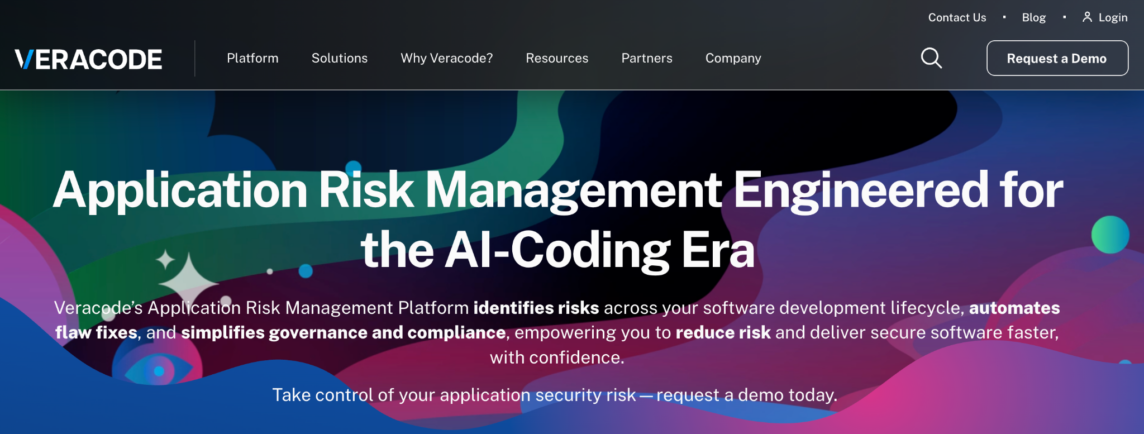
Enterprise security programs tend to evolve differently from startup security programs. Governance becomes more important. Reporting requirements become more extensive. Compliance obligations become more demanding. Visibility across large application portfolios becomes a major priority.
Veracode has spent years operating in that environment. The platform provides broad application security coverage while supporting the governance and reporting capabilities many larger organizations require.
Capabilities include:
- SAST
- DAST
- SCA
- Penetration testing
- Compliance reporting
- Risk management
For enterprise environments, Veracode remains a familiar and widely evaluated option.
5. GitHub Advanced Security
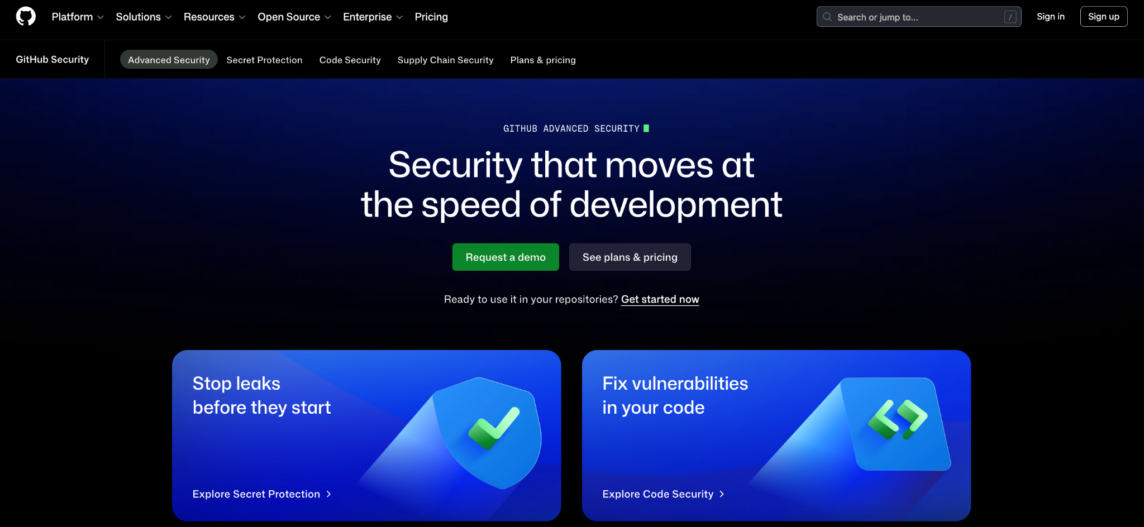
Few companies sit closer to developers than GitHub. That positioning creates a unique advantage.
Rather than asking developers to leave their existing workflows, GitHub Advanced Security brings security capabilities directly into repositories, pull requests, and development pipelines.
For organizations already operating heavily within GitHub, the platform often feels less like another security product and more like a natural extension of existing tooling.
Capabilities include:
- Code scanning
- Secret scanning
- Dependency security
- Security campaigns
- Pull request integration
- Copilot Autofix
Developer-centric organizations frequently evaluate GitHub Advanced Security alongside broader AppSec platforms.
6. Semgrep
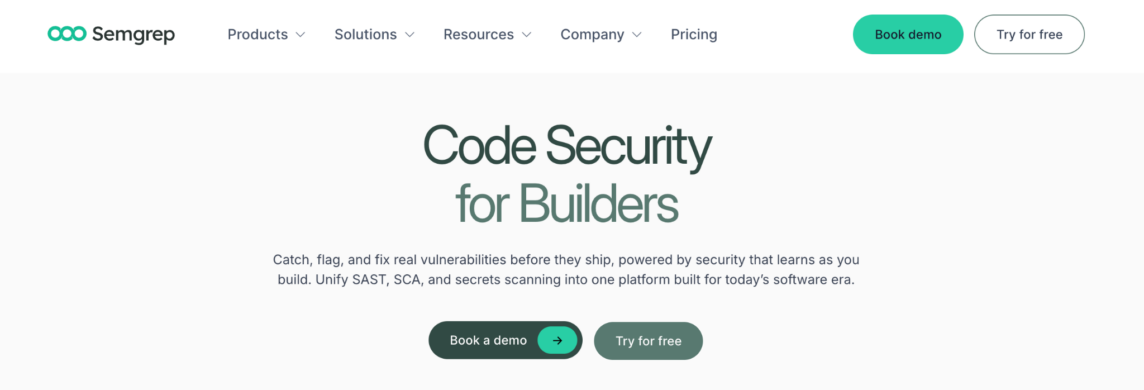
Some organizations prioritize control and customization. They want security tooling that adapts to their environment rather than forcing the environment to adapt to the tool.
Semgrep has built a strong reputation among engineering teams that value flexibility. Custom rules, developer-focused workflows, and extensibility have helped the platform gain traction across organizations that prefer highly configurable security programs.
Capabilities include:
- SAST
- Custom security rules
- Secrets detection
- Supply chain security
- CI/CD integration
- Developer-focused workflows
For teams seeking flexibility alongside security coverage, Semgrep remains a popular option.
7. Mend.io
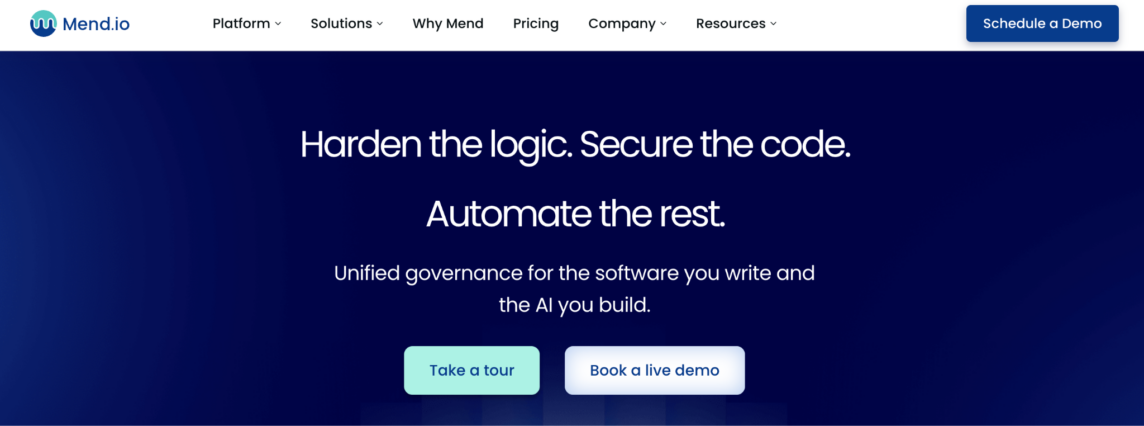
Open-source software has become inseparable from modern development. That reality has elevated software composition analysis from a niche capability to a core AppSec requirement.
Many organizations now spend as much time thinking about dependencies as they do application code itself. Mend has spent years helping organizations understand, manage, and secure open-source ecosystems.
Capabilities include:
- Software composition analysis
- Dependency management
- License compliance
- Vulnerability remediation
- Supply chain security
Organizations with significant open-source exposure often evaluate Mend as part of broader AppSec modernization initiatives.
8. Black Duck
Software supply chain security continues moving higher on executive agendas. SBOM requirements, regulatory expectations, vendor risk management, and open-source governance have all contributed to this trend.
As a result, platforms focused on dependency visibility and software supply chain security have become increasingly important. Black Duck remains one of the most established names in that category.
Capabilities include:
- SCA
- License analysis
- SBOM support
- Open-source governance
- Vulnerability management
- Compliance reporting
For organizations operating in regulated industries, these capabilities can play a significant role in platform evaluations.
Why Point Solutions Are Losing Momentum
Point solutions are not disappearing. Many remain excellent at what they do. The challenge is that modern security programs rarely operate within a single category. Risks connect across code, infrastructure, dependencies, containers, cloud environments, and runtime systems.
Security teams increasingly want one place to understand those relationships. When a vulnerability appears, they want to know:
- Is it exploitable?
- Is it reachable?
- Is it exposed?
- Who owns it?
- How should it be fixed?
Answering those questions often requires data from multiple security domains. That reality continues driving interest in broader application security platforms.
The Best Platform Depends on What You’re Trying to Simplify
Some organizations want stronger developer adoption. Others want fewer tools. Some prioritize governance and reporting. Others focus on remediation speed, cloud visibility, or vulnerability prioritization.
The strongest platform is not necessarily the one with the longest feature list. It is the one that removes the most friction from your security program.
For teams evaluating Snyk alternatives, platforms such as Aikido, Checkmarx One, Veracode, GitHub Advanced Security, Semgrep, Mend.io, Black Duck, and even Snyk itself represent different approaches to solving the same challenge: helping security teams manage increasingly complex software environments without creating even more complexity in the process.